2.png)
"From Charity to Solidarity: Organizing as a Sacred Calling" - A Reflection from Rev. Dr. Marvin Lance Wiser
Community organizing has always been about relationships — people coming together, grounded in shared values, to build power for the common good. While tactics have changed over time, the strategic heart of organizing remains deeply local, relational, and rooted in trust. In an age that pulls us toward speed and the digital, the most transformative organizing still happens in analog spaces: face-to-face in living rooms, around tables, in sanctuaries, and in the everyday spaces where people dare to imagine something different together.
For me, organizing was not just learned in theory, but in practice while on staff at Workers Defense Project (Proyecto Defensa Laboral), a member-led migrant worker justice organization in Texas. There, I witnessed what it means to build power with, not for, communities. Organizing is not charity; it is solidarity. It is not about speaking on behalf of others or what some call being a “voice for the voiceless,” but about co-creating the conditions for people to speak and lead for themselves. And yes, that means those of us with institutional privilege — often white, often resourced — must be willing to hand over the megaphone, to step back so others can step forward. Movements for justice are always multivocal.
Scripture itself can be read as a handbook for organizing. Long before modern frameworks, there was Moses — called to confront empire, organize a people, and journey toward liberation. As organizer Ernesto Cortés Jr. often notes, Moses is one of the great models of organizing leadership. The Exodus story reminds us that liberation is not accidental; it is collective, strategic, and sustained. Yet too often, faith communities remain comfortable downstream. Many of our faith-based and community-based organizations are busy pulling babies out of the river — responding to urgent needs — while fewer are willing to journey upstream to confront the systems forcing those babies into the water in the first place. The call of organizing invites us upstream.
This requires an intentional shift: from charity to solidarity, from resilience to empowerment, from simply welcoming and including people to cultivating true belonging. It looks like creating justice teams within our congregations — spaces where faith is not only formed but mobilized. It looks like weaving advocacy into the fabric of our ministries, connecting with other changemaker institutions, and building collective strategies that address root causes. It may even mean having the courage to step outside the constraints of the nonprofit industrial complex when those systems limit our ability to build real power. At its core, this is about embracing a clear theory of change: when people most impacted by injustice are organized, resourced, and developed as leaders, they can transform not only their immediate conditions, but the systems themselves. Our work is not simply to meet needs — it is to build power that changes the conditions that produce those needs.
There is no shortage of things to be angry about in our world today. In the tradition of Saul Alinsky, organizers have long understood the importance of naming and harnessing that anger — what some call a “cold anger,” disciplined and focused, like a blue flame. But anger alone is not enough. We must also cultivate what I would call a “warm love” — a deep, abiding commitment to one another that sustains us when even hope feels audacious. Movements endure not only because of what they resist, but because of what they build together: communities of care, joy, and shared purpose.
Sustaining momentum in this work requires a shift from urgency to endurance. Burnout is real, especially for those closest to the struggle. What I’ve learned is that momentum is not just built through action but through community. Celebrating small wins, investing in leadership development, and creating spaces of joy and reflection are essential. Movements that last are those that cultivate belonging, not just participation. When people feel seen, valued, and connected, they stay engaged for the long haul.
At Eden United Church of Christ, this work takes shape through four interconnected pillars that reflect a pathway toward collective transformation. Through Community Resilience, we move from stability to trust to a foundation for growth. Through the Newcomer Navigation Center, we expand access, accompaniment, and capacity. Through Faith & Spiritual Life, we cultivate belonging, meaning, and mobilization. And through the Eden Power Collective, we invest in leadership, agency, and systems change — ensuring that those most impacted are leading the work that shapes their futures.
For those wondering how to begin, start where you are. Build relationships. Listen deeply. Show up consistently. Join or form a justice team in your church or community. Support local efforts. Listen some more. And remember: organizing is not reserved for a select few, it belongs to all of us. Each of us has a role to play in the work of justice.
Jesus himself was an organizer. He gathered people, built relationships, developed leaders, and sent them out to transform the world. He called this work “The Way.” He did not act alone, but discipled others, sharing power and multiplying impact. In that spirit, we are invited to do the same: to be a movement of wholeness in a fragmented world — grounded in love, fueled by justice, and sustained in community.
¡Sí se puede!
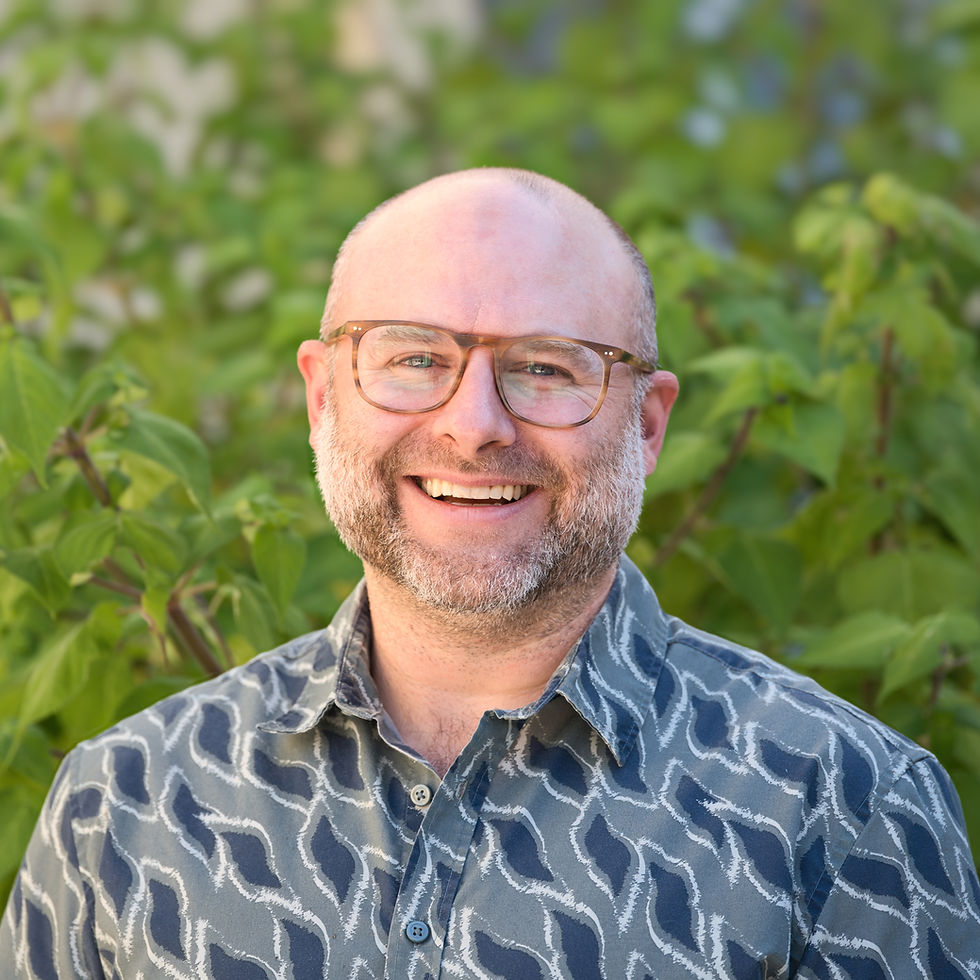
Rev. Dr. Marvin Lance Wiser is Senior Minister and Executive Director of Eden United Church of Christ in Hayward, CA, where he leads community-empowered ministry and faith-rooted justice work. A former DSF student, he earned his Ph.D. from the Graduate Theological Union, with a focus on Hebrew Bible, ethnicity, migration, labor, and belonging. He will be teaching an upcoming Spanish-language course at Berkeley School of Theology, “The Politics of Purity & The Gospel of Belonging.” He lives in the East Bay with his spouse, Yuliana, their two daughters, and their dog, Pancho.
Comments